
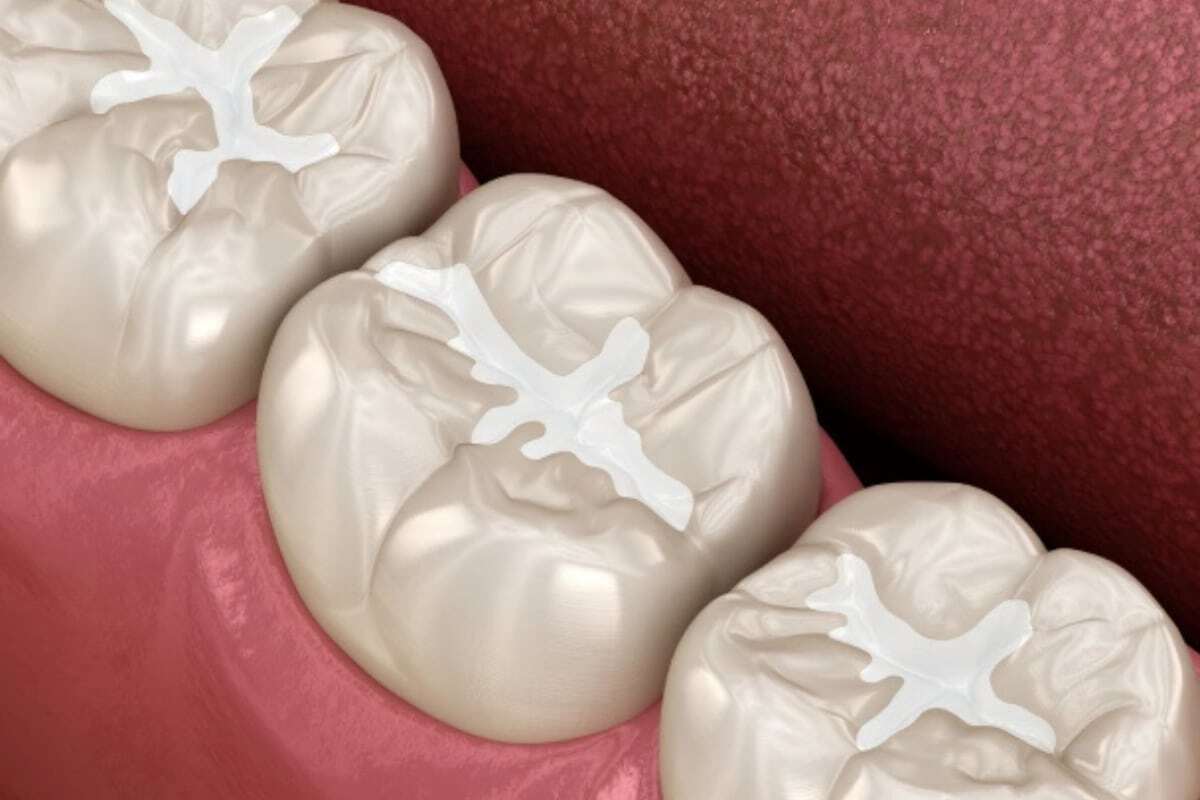
If you’ve been told you have sensitive teeth, you might hesitate before agreeing to any dental procedure even a preventive one. Dental sealants are one of the most recommended tools in modern dentistry for protecting teeth from decay, but a common question patients ask is: “Are dental sealants safe if my teeth are already sensitive?”
The short answer is yes, and in many cases, dental sealants can actually help reduce sensitivity by shielding exposed tooth surfaces. At Canyons Family Dental Sandy, serving patients throughout Sandy, UT 84070, our team regularly helps patients with sensitive teeth understand how sealants work and whether they’re the right fit. Here’s everything you need to know.
What Are Dental Sealants?
Dental sealants are thin, protective coatings usually made of plastic resin or glass ionomer material that are painted onto the chewing surfaces of the back teeth (molars and premolars). Once applied, they bond to the grooves and pits of the tooth, forming a hard shield against food particles and bacteria.
They’re most commonly recommended for children and teenagers, but adults with a high risk of cavities or deep tooth grooves can benefit just as much.
The application process is quick, painless, and non-invasive making it especially appealing for patients who already deal with tooth sensitivity.
Why Sensitive Teeth Raise Questions About Sealants
Tooth sensitivity occurs when the protective enamel wears down or the gums recede, exposing the softer layer beneath (called dentin). This exposed dentin reacts to temperature, pressure, and certain foods causing that sharp, familiar sting.
Naturally, patients with sensitive teeth worry that:
- The sealant material might irritate already-sensitive enamel
- The application process could trigger discomfort
- Chemical components in the sealant could worsen their condition
These are valid concerns and they deserve honest, evidence-based answers.
Are Dental Sealants Safe for Sensitive Teeth?
The Short Answer: Yes, With the Right Approach
Most patients with sensitive teeth tolerate dental sealants very well. The procedure itself involves no drilling, no anesthesia, and no removal of tooth structure. The dentist simply cleans the tooth, applies an acidic gel briefly to help the sealant bond, rinses it off, and then paints on the sealant material.
For most people, this causes zero discomfort. For those with heightened sensitivity, any mild awareness during the acid-etching step is temporary and minor.
What the Research Says
Studies consistently show that dental sealants are safe for the general population, including those with sensitivity concerns. The American Dental Association (ADA) endorses their use and confirms that modern sealant materials have been rigorously tested for biocompatibility.
One point that sometimes worries patients: early-generation sealants contained trace amounts of BPA (bisphenol A). However, current formulations used by reputable dental practices contain little to no measurable BPA, and exposure if any is far below levels considered harmful.
Glass Ionomer Sealants: A Gentler Option
For patients with significant sensitivity, glass ionomer sealants offer a particularly gentle alternative. Unlike resin-based sealants, they:
- Release fluoride over time, which can actually strengthen enamel
- Bond without the need for acid etching
- Are less likely to cause any post-application sensitivity
Your dentist at Canyons Family Dental Sandy can help you determine which type is best suited for your specific situation.
What Dentists Recommend for Sensitive Teeth Patients
If you have sensitive teeth and are considering dental sealants, here’s what dental professionals typically advise:
- Disclose your sensitivity history. Always tell your dentist sandy about your sensitivity triggers before any procedure. This helps them choose the right sealant material and technique.
- Ask about desensitizing pretreatment. Some dentists apply a desensitizing agent before the sealant to minimize any discomfort during the process.
- Choose an experienced provider. Proper application technique significantly reduces the chance of post-procedure sensitivity. At our Sandy, UT 84070 office, our team is trained to handle even the most sensitive cases with care.
- Follow aftercare guidance. Avoid very hot or cold foods for a few hours after application while the sealant fully sets.
Benefits of Dental Sealants That Outweigh the Hesitation
For patients on the fence, it helps to weigh the benefits:
- Cavity prevention: Sealants can reduce the risk of decay in back teeth by up to 80% in the first two years, according to the CDC.
- Cost savings: Preventing a cavity costs far less than filling one.
- Longevity: Sealants can last 5–10 years with proper care.
- Non-invasive: No needles, no drilling it’s one of the gentlest procedures in dentistry.
- Protective barrier: For sensitive teeth, covering deep grooves can actually reduce the number of surfaces exposed to temperature and food triggers.
If you’re in the Sandy area and wondering whether sealants are right for you, schedule your appointment today with Canyons Family Dental Sandy and get a personalized assessment.
How Long Do Dental Sealants Last, and Do They Need Replacement?
Dental sealants are durable, but they’re not permanent. Over time, normal chewing can cause them to chip or wear away. Your dentist will check the condition of your sealants at routine visits and can reapply them as needed a quick and straightforward process.
The good news: even a partially worn sealant still provides meaningful protection compared to no sealant at all.
Questions Patients Often Ask About Sealants and Sensitivity
Can dental sealants make tooth sensitivity worse?
In most cases, no. The procedure is non-invasive and doesn’t involve removing enamel. If anything, covering exposed grooves can reduce sensitivity triggers. Some patients report mild, short-term sensitivity after application, but this typically resolves within a day or two.
Are sealants only for children, or can adults get them too?
Adults can absolutely benefit from dental sealants, especially if they have deep grooves in their molars, a history of cavities, or difficulty cleaning certain areas effectively. Age is not a barrier cavity risk is.
Will I feel anything during the sealant application?
Most patients feel nothing at all. The process involves cleaning the tooth, a brief application of a mild etching solution, rinsing, and then painting on the sealant. There’s no drilling involved. Patients with very sensitive teeth may feel mild awareness during the etching step, but it passes quickly.
How do I know if my sealants are still intact?
You can’t always tell by feel alone. Your dentist will visually inspect your sealants at each checkup and probe them gently to ensure they’re still bonded properly. This is another great reason to keep up with regular visits at Canyons Family Dental Sandy in Sandy, UT 84070.
Are there any ingredients in sealants I should be concerned about?
Modern sealants are considered very safe. While older formulations sometimes contained trace BPA, current materials are designed to minimize or eliminate this. If you have known material sensitivities or allergies, let your dentist know before application so they can select the most appropriate product for you.
The Bottom Line: Sealants and Sensitive Teeth Can Coexist
Tooth sensitivity doesn’t have to be a roadblock to better dental protection. With the right sealant material, a skilled and attentive dental team, and open communication about your concerns, dental sealants are a safe, effective, and often beneficial choice even for sensitive teeth.
At Canyons Family Dental Sandy, we take pride in offering personalized, patient-first care to families across Sandy, UT 84070 and the surrounding communities. Whether you’re exploring preventive options for yourself or your child, our team is here to walk you through every step with clarity and compassion.
Ready to protect your smile? Schedule your appointment today at Canyons Family Dental Sandy because the best cavity is the one that never forms.