
Losing a tooth might seem like a cosmetic concern something that affects your smile, your confidence, maybe your comfort at meals. But the truth runs much deeper. Missing teeth can quietly undermine your overall health in ways most people never see coming. The good news? Replacing missing teeth is one of the most effective, long-term solutions available in modern dentistry and its benefits go far beyond a better-looking smile.
At Canyons Family Dental Sandy, we’ve seen firsthand how dental implants transform not just smiles, but lives. If you have one or more missing teeth, this guide is for you.
Why Missing Teeth Are More Than a Cosmetic Problem
When a tooth is lost, the effects ripple throughout your entire body. Most people focus on the visible gap, but what’s happening beneath the gum line and throughout your body can be far more significant.
Bone Loss Begins Immediately
Your jawbone needs the stimulation of tooth roots to stay strong. Without that stimulation, the bone begins to deteriorate a process called resorption. Within the first year of losing a tooth, you can lose up to 25% of bone volume in that area. Over time, this can alter the shape of your face, cause neighboring teeth to shift, and make future dental work more complex.
Your Bite and Jaw Alignment Suffer
When teeth are missing, adjacent teeth gradually drift into the empty space. This misalignment can lead to:
- Uneven bite pressure
- Jaw pain or TMJ (temporomandibular joint) disorders
- Accelerated wear on remaining teeth
- Headaches and chronic facial tension
Digestion and Nutrition Are Affected
Chewing is the first step in digestion. When missing teeth make it painful or difficult to chew properly, people unconsciously avoid hard, fibrous foods, often the most nutritious ones. Fruits, vegetables, lean proteins, and whole grains may be replaced by softer, processed alternatives. Over time, this dietary shift can affect energy levels, immunity, and long-term health.
What Are Dental Implants and How Do They Work?
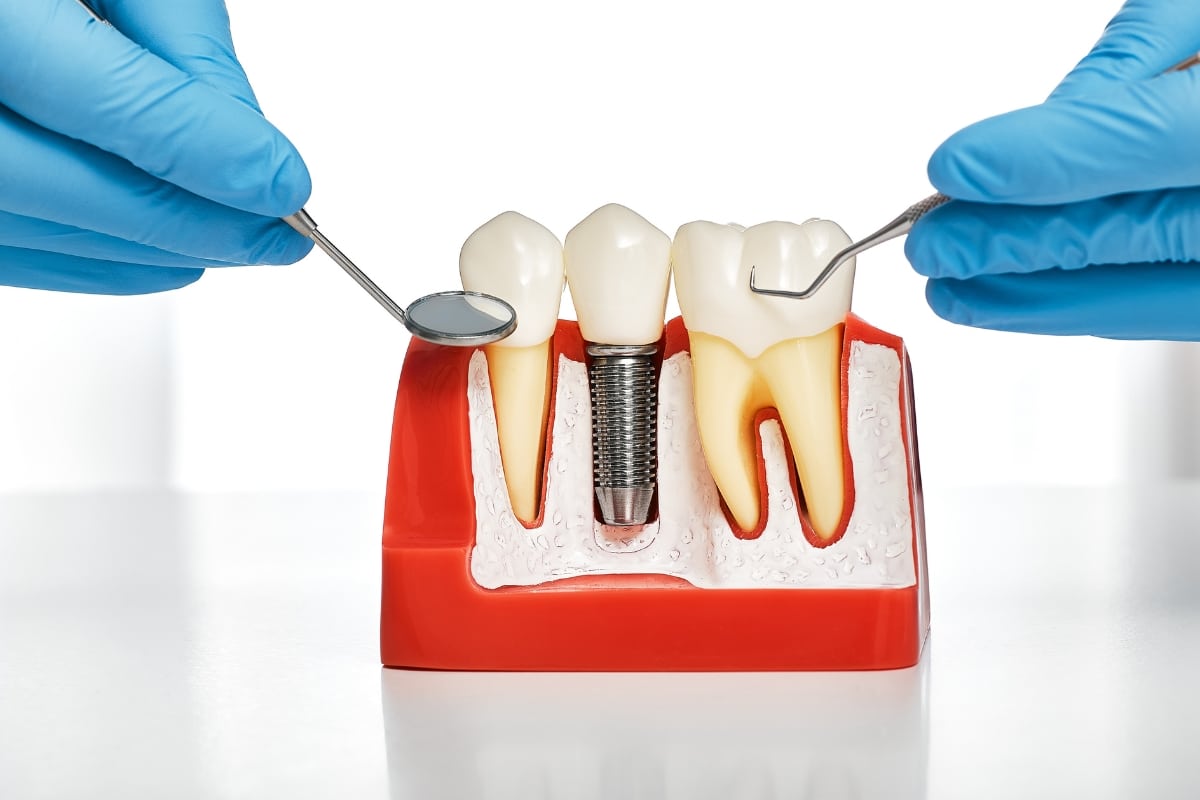
A dental implant is a small titanium post surgically placed into the jawbone, acting as an artificial tooth root. Once it fuses with the bone (a process called osseointegration), a custom crown is attached on top to match your natural teeth.
The result is a replacement tooth that:
- Looks completely natural
- Functions just like a real tooth
- Stimulates the jawbone to prevent bone loss
- Lasts for decades with proper care
Unlike dentures or bridges, implants are a permanent, standalone solution that doesn’t rely on neighboring teeth for support.
How Replacing Missing Teeth with Implants Improves Your Health
1. Preserves Jawbone and Facial Structure
This is one of the most critical and underappreciated benefits. Because implants mimic real tooth roots, they deliver the stimulation your jawbone needs to stay dense and strong. This preserves your facial contours and prevents the “sunken” look that often accompanies long-term tooth loss.
2. Restores Full Chewing Function
With dental implants, you can eat virtually anything again apples, steak, raw vegetables, nuts. This isn’t just a quality-of-life win; it’s a direct nutrition upgrade. Better chewing means better digestion and better absorption of essential nutrients.
3. Protects Neighboring Teeth
Dental bridges require filing down adjacent healthy teeth to serve as anchors. Implants stand entirely on their own, leaving surrounding teeth untouched and structurally intact.
4. Improves Oral Hygiene
Implants are cleaned just like natural teeth brush, floss, regular checkups. There are no food traps, no adhesives, and no special soaking routines. This simplicity makes it easier to maintain excellent oral hygiene, reducing the risk of gum disease and further tooth loss.
5. Supports Mental and Emotional Wellbeing
Research consistently links tooth loss to lower self-esteem, social withdrawal, and even depression. Patients who restore their smiles with implants frequently report:
- Greater confidence in social settings
- Improved quality of life overall
- A willingness to smile freely again
6. Long-Term Cost Efficiency
While implants have a higher upfront cost than dentures or bridges, they are designed to last a lifetime with proper care. Dentures often need replacement every 5–10 years. Bridges may fail over time, requiring further intervention. Implants, by contrast, are a one-time investment in lasting health.
Am I a Candidate for Dental Implants?
Most healthy adults with one or more Replacing missing teeth are candidates. The best candidates typically:
- Have adequate jawbone density to support the implant
- Do not smoke, or are willing to quit during healing
- Have well-controlled blood sugar (if diabetic)
- Are committed to good oral hygiene
If bone loss has already occurred, a bone graft may be recommended before implant placement, a common and highly effective procedure.
The only way to know for certain is a personalized evaluation. Schedule a consultation at Canyons Family Dental Sandy and we’ll assess your suitability with digital X-rays and a thorough exam.
What to Expect: The Implant Process Step by Step
The implant journey unfolds over several months, but most of that time is simply healing not active treatment.
- Consultation & Planning : Digital imaging and treatment planning
- Implant Placement : A minor surgical procedure; most patients resume normal activity within 1–2 days
- Osseointegration : The implant fuses with the jawbone over 3–6 months
- Crown Placement : A custom, natural-looking crown is attached
- Ongoing Care : Regular cleanings and checkups to ensure lasting success
Throughout the process, our team at Canyons Family Dental Sandy prioritizes your comfort and keeps you informed at every step.
Questions Patients Often Ask Us
How long do dental implants actually last?
With proper care, implants can last 25 years or longer many last a lifetime. The crown on top may eventually need replacement after 10–15 years, but the implant post itself is highly durable.
Does the implant procedure hurt?
Most patients are surprised by how manageable the experience is. Local anesthesia is used during placement, and any post-procedure discomfort is typically mild and controlled with over-the-counter pain relievers. Many patients return to work the next day.
Will my implant look natural?
Yes. The crown is custom-crafted to match the color, shape, and size of your surrounding teeth. Even people who know you personally are unlikely to notice any difference.
What happens if I wait to replace a missing tooth?
The longer a tooth is missing, the more jawbone deteriorates. This can make implant placement more complex or require additional procedures like bone grafting. Acting sooner generally means a simpler, more affordable process.
Can I get implants if I’ve had gum disease?
In many cases, yes but the gum disease must be treated and controlled first. Active infection around the implant site is a risk factor, so we’ll assess your gum health carefully before proceeding.
Take the First Step Toward a Healthier Smile
Replacing missing teeth with implants isn’t just a dental decision it’s a health decision. From protecting your jawbone and improving nutrition to boosting confidence and protecting adjacent teeth, the benefits touch nearly every area of your wellbeing.
At Canyons Family Dental Sandy, our experienced team is here to guide you through every step of the process with care, precision, and a genuine commitment to your long-term health.
Schedule your appointment today and take the first step toward a healthier, more complete smile. Our team is ready to answer your questions, evaluate your options, and create a personalized treatment plan that fits your life.
Your smile and your health are worth it.