
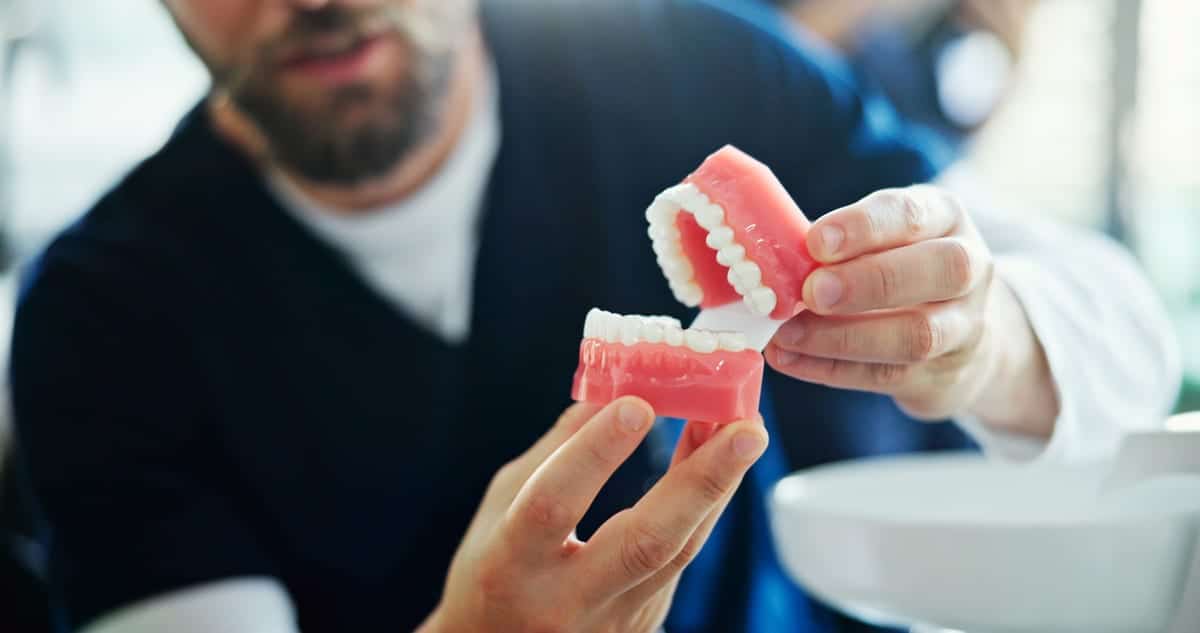
Losing teeth can feel overwhelming. But today’s denture options make it possible to restore your smile comfortably and confidently. If you’re exploring full vs partial vs implant dentures and which fits your smile in Midvale, this guide will help you understand each option. Dr. Pulin Trivedi and the team at Canyons Family Dental are here to walk you through everything.
Understanding Full Dentures: Who Are They For?
Full dentures, also called complete dentures, replace an entire arch of teeth. Dentists recommend them when all teeth in the upper or lower jaw are missing. They rest directly on the gum tissue and are removable for cleaning.
Full dentures work well for patients who need a complete tooth replacement. They are one of the most affordable and widely accessible options available. Many Midvale residents choose full dentures as a practical, effective solution.
Here’s what to expect with the full denture process:
- Initial consultation and impressions of your mouth
- Custom fabrication of your denture set
- Fitting appointment with adjustments
- Follow-up visits to ensure comfort and function
Full dentures can take some time to adjust to. Most patients adapt within a few weeks. With proper care, they can last many years.
Partial Dentures: The Right Fit When Some Teeth Remain
Partial dentures are designed for patients who still have some natural teeth. They clip or attach to existing healthy teeth using a metal framework or clasps. This approach fills gaps without removing healthy teeth unnecessarily.
Partial dentures prevent remaining teeth from shifting out of position. That shifting can cause bite problems and jaw discomfort over time. Addressing gaps early protects your long-term oral health.
Patients in Midvale who are comparing full vs partial vs implant dentures often find partials a great middle-ground choice. They are less invasive than implants and more conservative than full dentures. They also tend to feel more natural because your own teeth provide support.
Benefits of partial dentures include:
- Preserves remaining natural teeth
- More affordable than implant-supported options
- Removable and easy to clean
- Custom-fitted for a comfortable feel
- Restores chewing ability and smile aesthetics
Partial dentures are part of the broader scope of General Dentistry care we provide at Canyons Family Dental. Our team will assess your existing teeth carefully before recommending this option.
Implant-Supported Dentures: A Permanent, Stable Solution
Implant-supported dentures combine the look of traditional dentures with the stability of dental implants. Titanium posts are surgically placed into the jawbone. The denture then snaps or locks onto these implants securely.
This option is ideal for patients who want a more permanent solution. Implant dentures don’t shift when eating or speaking. They also help preserve jawbone density, which traditional dentures cannot do.
The process for implant-supported dentures takes longer than traditional options. It typically involves multiple appointments over several months. The timeline includes implant placement, healing, and final denture fitting.
Who is a good candidate for implant dentures? Consider these factors:
- Sufficient jawbone density to support implants
- Good overall oral and general health
- Non-smoker or willing to quit before surgery
- Desire for a stable, long-term tooth replacement
Implant dentures cost more upfront than full or partial options. However, their durability and comfort often make them worthwhile in the long run. Many patients say implant dentures feel closest to natural teeth.
Full vs Partial vs Implant Dentures: Which Fits Your Smile in Midvale?
Choosing the right denture type depends on several personal factors. Your oral health, bone structure, and lifestyle all play a role. There is no single answer that works for every patient.
Here is a simple breakdown to guide your thinking:
- Full dentures: Best when all teeth in one arch are missing
- Partial dentures: Best when some healthy natural teeth remain
- Implant dentures: Best for patients seeking maximum stability and longevity
Dr. Pulin Trivedi will evaluate your specific situation during a consultation. He takes the time to explain every option clearly and without pressure. His goal is to help you make the most informed decision possible.
Canyons Family Dental also offers Kid-Friendly Dentistry for younger family members. Early dental care helps children avoid tooth loss and restorative needs later in life. Building healthy habits early makes a real difference.
What to Expect at Your Denture Consultation in Midvale
Your first appointment will focus on understanding your needs. Dr. Trivedi will take digital X-rays and impressions of your mouth. He will review your dental history and discuss any concerns you have.
From there, your treatment plan gets customized to your goals. If implants are involved, the process may include a referral for oral surgery. The team coordinates every step, so your experience stays smooth and stress-free.
Sedation options are also available at Canyons Family Dental for anxious patients. You don’t have to feel nervous about the process. Our friendly team makes every visit as comfortable as possible.
We serve patients throughout the Sandy and Midvale areas with compassionate, expert dental care. Whether you need full dentures, partials, or implant-supported restorations, we are ready to help. Book Now to schedule your appointment with our team.
Frequently Asked Questions
How long do full dentures typically last?
Full dentures generally last between five and ten years with proper care. Your gums and jawbone change shape over time, which can affect how your dentures fit. Regular check-ups with Dr. Trivedi help ensure your dentures continue to fit well and function properly.
Can I eat normally with partial dentures?
Most patients can eat a wide variety of foods with partial dentures. It is best to start with softer foods as you adjust to wearing them. Over time, most people find they can eat comfortably with minimal restrictions.
Are implant-supported dentures painful to get?
The implant placement procedure is done under local anesthesia, so you won’t feel pain during the process. Some soreness and swelling are normal during healing. Dr. Trivedi will provide clear aftercare instructions to keep your recovery as comfortable as possible.
How do I clean my dentures properly?
Remove your dentures daily and rinse them thoroughly after eating. Brush them gently with a soft denture brush and mild soap or denture cleaner. Avoid using regular toothpaste, as it can be too abrasive for denture materials.
Is there an age limit for getting dental implants?
There is no upper age limit for dental implants. What matters most is your overall health and jawbone density. Dr. Trivedi will assess whether you are a good candidate during your consultation, regardless of your age.